
he roar hits you before the turnstiles do. Walking up Avenida de Suecia on a matchday, the low hum of 48,000 voices swells into something physical—a wall of sound that bounces off the exposed concrete ribs of Mestalla's exterior. This isn't a stadium that greets you politely;it confronts you. I first visited in 2019 for a mid-table La Liga clash, expecting a muted atmosphere. Instead, I got ninety minutes of unrelenting noise。punctuated by the sharp crack of seats being slammed shut in frustration. That visceral reaction, repeated across decades, is why Mestalla remains one of Europe's most intimidating grounds even as Valencia CF has slipped from its early-2000s peak.Built in 1923, Mestalla wears its age openly. The steep stands—some sections pitch at nearly 40 degrees—create a vertiginous viewing experience. From the top tier of the north end。players look like chess pieces, yet the acoustics funnel every shout straight down. Unlike modern bowls with padded seats and cavernous concourses, this place feels improvised: narrow stairways, peeling paint on the yellow railings, kiosks selling sunflower seeds and stale bocadillos. That roughness amplifies the tribal energy. I watched a lifelong season-ticket holder named Paco explain the ground's quirks to a group of German tourists—how the away fans are tucked into a corner with a net above them, how the old press box still has manual typewriter slots. "Mestalla doesn't try to be comfortable," he shrugged. "It tries to be loud."
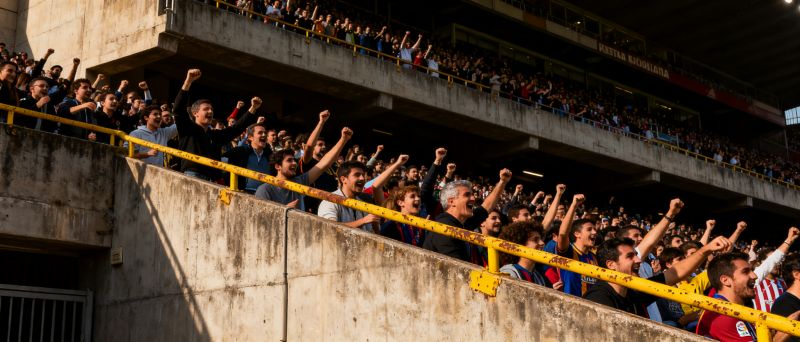
The stadium's history carries weight beyond football. During the Spanish Civil War, Mestalla served as a makeshift prison and later hosted Republican government meetings—a fact often glossed over in matchday programs. That layered past gives the ground a gravity that newer, shinier arenas lack. On quieter afternoons, you can feel it in the worn stone steps and faded mosaics. Valencia's planned move to the Nou Mestalla, half-built since 2009。has stalled repeatedly due to financial crises and political wrangling. Many supporters I spoke with are ambivalent. "A new stadium means better toilets and more corporate boxes," one fan told me outside a bar on Calle de Suecia. "But it won't have ghosts." That skepticism feels justified—Mestalla's character is inseparable from its imperfections.Mestalla's future remains uncertain, yet its present value is undeniable. As Spanish football modernizes, clubs risk homogenizing their atmospheres—all-seated, sanitized, sponsor-drenched. Mestalla resists that trend simply by existing. Its narrow concourses force strangers into conversation;
its steep terraces produce a collective anxiety that boils over into sudden。explosive joy. I recall a 93rd-minute equalizer against Getafe in 2022: the man next to me, who had spent the match complaining about the manager, grabbed my shoulder and screamed into my ear. No names, no introductions—just shared delirium. That's Mestalla's real function. It manufactures moments of unguarded human connection, raw and loud and slightly uncomfortable. Long may it stay that way.